Short Sale Recovery
VA Loan After Short Sale: Waiting Periods and Eligibility
A short sale is not a death sentence for your VA loan eligibility. The VA itself does not impose a mandatory waiting period after a short sale. The waiting period comes from lender overlays, and those typically run 2 years. Here is exactly how the timeline works, what affects it, and how AUS evaluates your file after a short sale.
Next step:
Check Your VA Loan Eligibility
No VA Mandatory Wait
- The VA does not require a specific waiting period after a short sale
- Lender overlays typically impose 2-year waiting periods
- Some lenders may approve sooner with extenuating circumstances documented
- Action: Ask your lender about their specific short sale seasoning requirement
Entitlement Recovery
- If the short-sold home had a VA loan, your entitlement may be partially or fully tied up
- A one-time restoration is available if the VA was not paid a claim
- If VA paid a claim on the short sale, second-tier entitlement may still work
- Action: Request your COE to check available entitlement before applying
Credit Score Impact
- A short sale can drop your credit score by 100-150 points initially
- The reporting ages off after 7 years, but score recovery starts much sooner
- Most borrowers can reach 620+ within 18-24 months of the short sale closing
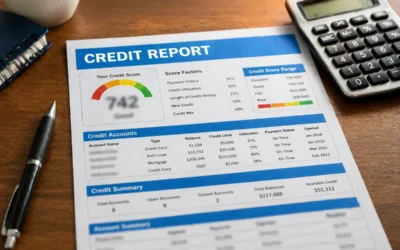
- Action: Pull your credit report and verify the short sale is reporting accurately
AUS Evaluation
- The automated underwriting system sees the short sale on your credit report
- Time since event, re-established credit, and current income all factor in
- AUS may still approve with strong compensating factors after 2 years
- Action: Rebuild at least 3 active tradelines before your next VA loan application
Frequently Asked Questions
How long do I have to wait after a short sale to get a VA loan?
Is a short sale treated the same as a foreclosure on a VA loan?
Can I still use my VA loan benefit if my short-sold home had a VA loan?
The Bottom Line Up Front
The VA does not require a mandatory waiting period after a short sale. That is the single most important fact in this entire article. The waiting period you will encounter — typically 2 years — is a lender overlay. Some lenders will go shorter with documented extenuating circumstances. Your entitlement, credit recovery, and time since the event are what determine whether you get approved.
Your approval still comes down to three pillars: credit, income, and assets. A short sale damages the credit pillar, but it does not permanently disqualify you. The automated underwriting system evaluates your full credit profile, not just the derogatory event. If enough time has passed, your score has recovered, and your income supports the new loan, AUS can still issue an approve.
A short sale is fundamentally different from a foreclosure in how it affects both your credit timeline and your VA entitlement. It is also different from a VA compromise sale, which is a VA-specific program for selling a VA-financed home for less than the payoff. This article covers the standard short sale path — where the lender agreed to accept less than what was owed.
If your short sale closed less than 2 years ago, do not assume you cannot get a VA loan. Lender overlays vary. Some lenders will consider 12-18 months with extenuating circumstances. The VA itself has no minimum. Start by pulling your COE and checking your available entitlement.
VA Waiting Period Rules After a Short Sale
The VA does not publish a specific seasoning period for short sales. This is a departure from how VA treats foreclosures, where the guidance references a 2-year minimum before guaranteeing another loan on the same entitlement.
Because VA does not mandate a waiting period, the timeline you face is dictated by lender overlays. Here is how the main guideline sources compare:
| Guideline Source | Short Sale Waiting Period | With Extenuating Circumstances |
|---|---|---|
| VA (38 CFR / Pamphlet 26-7) | No mandatory waiting period | N/A — no base requirement |
| Most VA lenders (overlay) | 2 years from short sale close date | 12-18 months (lender discretion) |
| Fannie Mae (conventional comparison) | 4 years | 2 years |
| FHA | 3 years | 1 year (with documentation) |
The VA advantage is clear: even with a lender overlay of 2 years, that is half or less of what conventional and FHA borrowers face. This is one of the genuine strengths of the VA loan program for veterans recovering from a housing event.
The short sale close date is what matters — not the date you listed the home or the date the lender approved the short sale. The 2-year clock starts when the deed transferred and the sale recorded at the county.
Extenuating Circumstances That Shorten the Wait
Lenders who allow a shorter waiting period after a short sale will require documented proof that the event was caused by circumstances beyond your control. “I bought too much house” does not qualify.
Extenuating circumstances that lenders typically accept include events that caused a sudden, significant loss of income or an unavoidable financial hardship. The documentation must show a direct cause-and-effect between the event and the short sale.
- Job loss or involuntary reduction in income (layoff letter, severance documentation)
- Serious medical event with major out-of-pocket costs (medical records, bills, insurance EOBs)
- PCS orders that forced a sale in a declining market (PCS orders, market analysis showing value drop)
- Divorce that eliminated a co-borrower’s income (divorce decree, separation agreement)
- Death of a co-borrower or primary wage earner (death certificate)
- Natural disaster that damaged the property beyond insurance coverage
You will need to write a detailed letter of explanation that connects the extenuating circumstance to the short sale decision. The letter should include dates, amounts, and supporting documents. Vague explanations get rejected. A clean extenuating circumstances package includes the letter, third-party documentation proving the event, and evidence that the financial hardship has been resolved.
Even with documented extenuating circumstances, the lender needs to see that you have re-established credit since the event. A shorter waiting period does not waive the credit recovery requirement. If your short sale closed 14 months ago but you have no new tradelines and your score is 580, the extenuating circumstances letter alone will not get you approved.
COE Eligibility After a Short Sale
A short sale does not revoke your Certificate of Eligibility. Your COE shows your available entitlement, and whether the short-sold home’s VA loan (if any) has been cleared from your record.
If the short-sold home was financed with a conventional, FHA, or other non-VA loan, your VA entitlement is completely unaffected. You still have full entitlement available, and the short sale only shows up as a credit event — not an entitlement event.
If the short-sold home did have a VA loan, your entitlement situation depends on whether the VA paid a guaranty claim to the lender:
- No VA claim paid: your entitlement can be restored through a one-time restoration request — full entitlement available for next purchase
- VA claim paid but entitlement never previously restored: you can use your one-time restoration, but the VA may require repayment of the claim amount before restoring
- VA claim paid and one-time restoration already used: your prior entitlement is charged, but second-tier (bonus) entitlement may cover the next purchase
Request your COE through your lender’s portal or directly from the VA before you start shopping. The COE will show your total entitlement, any charges against it, and whether a prior restoration has been used. This is the first step — everything else depends on what the COE shows.
Entitlement Restoration When a Short Sale Involved a VA Loan
If the property you short-sold had a VA-backed mortgage, your entitlement does not automatically come back. You have to request entitlement restoration, and the path depends on whether VA took a loss.
When a VA loan is short-sold, the lender files a claim with the VA for the difference between the sale price and the loan balance. The VA’s guaranty covers a portion of that loss. If the VA paid a claim, that claim amount is charged against your entitlement until it is either repaid or your entitlement is restored through the one-time restoration process.
The one-time restoration is exactly what it sounds like: you get one chance to have previously used entitlement restored. This is the same restoration available to veterans who sell a VA-financed home at full payoff. The difference is that a short sale with a VA claim may require you to repay the claim amount before the VA processes the restoration.
| Scenario | Entitlement Impact | Restoration Path |
|---|---|---|
| Short sale of non-VA loan | No entitlement impact | No restoration needed |
| Short sale of VA loan, no claim paid | Entitlement charged but restorable | One-time restoration (VA Form 26-1880) |
| Short sale of VA loan, claim paid, first restoration | Entitlement charged + claim debt | One-time restoration (may require claim repayment) |
| Short sale of VA loan, claim paid, restoration already used | Entitlement permanently reduced | Second-tier entitlement only |
If you are working with partial entitlement, the math gets more specific. The amount of entitlement tied up equals 25% of the original VA loan amount. Your remaining entitlement, plus any second-tier bonus entitlement, determines whether you can purchase again with zero down or whether a down payment is required.
How AUS Evaluates a Short Sale on Your Credit Report
The automated underwriting system sees your short sale as a derogatory credit event. How much it matters depends on how long ago it happened, what your credit looks like now, and how strong the rest of your file is.
A short sale typically reports on your credit as “settled for less than full balance” or a similar notation. It stays on your credit report for 7 years from the date of the first missed payment that led to the short sale. AUS weighs the recency of the event heavily — a short sale from 4 years ago with clean credit since then is treated very differently from one that closed 13 months ago.
AUS does not make a binary yes/no decision based solely on the short sale. It runs your entire credit profile through its risk model, including:
- Time elapsed since the short sale close date
- Current credit score (most lenders require 620+ minimum as an overlay)
- Re-established credit history — new tradelines with clean payment history
- Current DTI and residual income
- Whether any other derogatory events occurred before or after the short sale
- Loan-to-value ratio and down payment (if applicable with partial entitlement)
A file with a 2-year-old short sale, a 660 credit score, 3 clean tradelines, stable income, and strong residual income has a real shot at an AUS approve. A file with a 2-year-old short sale, a 600 score, no new credit, and thin reserves will likely get a refer.
Credit score overlays are lender-specific, not VA requirements. The VA does not set a minimum credit score. A lender with a 620 overlay may decline you at 615, but another lender with a 580 overlay may approve the same file. If one lender says no, a second opinion from another VA lender is worth pursuing.
Re-Establishing Credit After a Short Sale
Credit recovery after a short sale is not about waiting for time to pass. It is about actively rebuilding your profile so AUS has clean data to evaluate.
A short sale drops most credit scores by 100-150 points initially. The drop is sharpest in the first 12 months. After that, the impact diminishes as new positive tradelines accumulate and the short sale ages. Most borrowers who actively rebuild can reach 620-660 within 18-24 months.
Here is a practical recovery timeline:
| Months After Short Sale | Typical Credit Score Range | Key Action |
|---|---|---|
| 0-6 months | 500-560 | Open 1-2 secured credit cards; set up autopay |
| 6-12 months | 560-600 | Keep utilization under 30%; add a credit-builder loan |
| 12-18 months | 600-640 | Diversify tradelines; avoid new debt outside of rebuilding |
| 18-24 months | 620-680 | Check credit report for accuracy; begin VA pre-approval process |
The credit-rebuilding actions that matter most are opening new tradelines (secured cards, credit-builder loans), keeping balances low relative to limits (under 30% utilization is the target, under 10% is ideal), and making every payment on time. Late payments during the rebuild period are devastating — they reset the “clean payment history” clock that AUS is looking for.
Before you apply for a VA loan, pull your credit report and verify the short sale is reporting correctly. Common errors include the wrong close date, an incorrect balance, or a status showing “foreclosure” instead of “settled.” Dispute any inaccuracies through the credit bureaus before your lender pulls your tri-merge mortgage credit report.
If your credit score is close to a lender’s overlay minimum, ask about a rapid rescore. A rapid rescore can update your mortgage credit file in 3-5 business days by reflecting recent payoffs or corrections, potentially moving you above the threshold without waiting another month for the bureaus to update naturally.
Short Sale vs. Foreclosure: Key Differences for VA Borrowers
A short sale is a negotiated sale. A foreclosure is a forced sale. That distinction matters for your timeline, your credit, and your entitlement.
| Factor | Short Sale | Foreclosure |
|---|---|---|
| VA waiting period | None mandated | 2 years minimum |
| Typical lender overlay | 2 years | 2-4 years |
| Credit score impact | 100-150 point drop | 150-200+ point drop |
| Credit report duration | 7 years | 7 years |
| Entitlement impact (VA loan) | Charged — restorable | Charged — restorable (claim likely) |
| Deficiency judgment risk | Possible (state dependent) | Possible (state dependent) |
From a pure underwriting standpoint, a short sale is the less damaging event. The credit impact is milder, the lender overlay is typically shorter, and the VA does not impose its own waiting period. If you have the option to pursue a short sale instead of waiting for foreclosure, the short sale is almost always the better outcome for your future VA loan eligibility.
The Bottom Line
A short sale does not lock you out of VA financing. The VA has no mandatory waiting period. Lender overlays run about 2 years, and documented extenuating circumstances can shorten that. The real requirements are re-established credit, stable income, and available entitlement. Start with your COE, build your credit, and find a lender whose overlays fit your timeline.
If the short-sold home had a VA loan, check whether the VA paid a claim and whether you have used your one-time entitlement restoration. Even with reduced entitlement, second-tier entitlement may cover a new purchase at zero down. The file is not dead — it just requires the right timing, the right credit profile, and a lender who knows how to run post-short-sale VA files. If you have been denied due to credit, getting a second opinion from another VA lender is a reasonable next step.