
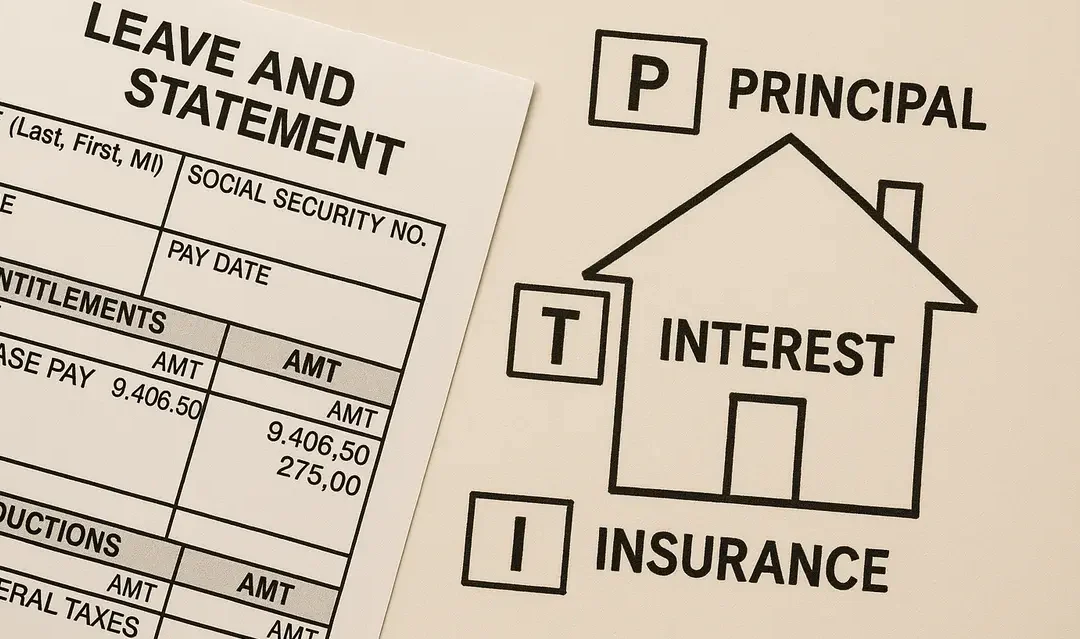
To make BAH cover your mortgage, your verified allowance must meet or exceed a realistic PITI—principal, interest, taxes, and insurance—plus room for fees and utilities. Use an accurate rate lookup, conservative payment modeling, and VA loan advantages to align the numbers. In expensive markets, strategy, property type, and location determine whether BAH comfortably fits.
Quick Facts
- PITI = principal, interest, property taxes, and homeowners insurance; escrow usually collects taxes and insurance monthly.
- BAH varies by ZIP, grade, and dependency and is generally non-taxable qualifying income for underwriting.
- VA loans help: no PMI, competitive rates, and zero down (if desired) reduce monthly payment pressure.
- Add non-mortgage costs: HOA dues, utilities, maintenance, and commuting time change affordability meaningfully.
- Hitting your target requires disciplined pricing, realistic insurance/tax estimates, and a small monthly cushion.
FAQ’s
How do I know if my BAH can cover PITI?
Calculate your exact BAH for the gaining duty station, then price homes so the projected PITI—using realistic local taxes and insurance—sits below that number. Leave room for non-mortgage costs and seasonal utility swings to keep cash flow comfortable.
Does a VA loan make it easier to match BAH to PITI?
Usually. With no PMI and competitive rates, VA loans lower the monthly payment versus many alternatives. Zero down is optional; a small down payment can trim principal and cut the payment further, improving the BAH-to-PITI fit.
What if my market is too expensive?
Consider price discipline, condos or townhomes, modestly longer commutes, or small multi-unit properties you’ll occupy. If PITI still overshoots BAH, rent first, build savings, and monitor inventory until conditions support a sustainable, allowance-aligned purchase.
Key Takeaways
- Verify BAH by ZIP and model PITI conservatively with local taxes and insurance.
- Use VA loan benefits—no PMI and competitive rates—to reduce required monthly payment.
- Add HOA dues, utilities, and maintenance; BAH must cover more than mortgage alone.
- Price discipline wins; target homes that keep PITI safely below verified allowance.
- In high-cost areas, consider condos, townhomes, or owner-occupied multi-unit options.
- Preserve a monthly cushion; small buffers prevent shortfalls during seasonal utility spikes.

Convert Your BAH to VA Buying Power
Enter your BAH and key financials. We’ll estimate a comfortable VA home price and the resulting monthly payment.
Explore More BAH Insights
-
2026 Basic Allowance for Housing (BAH) Rates by City
Official 2026 tables by city and MHA -
How BAH Affects VA Loan Buying Power
How allowance converts to qualifying income and price -
Military Housing Allowance (MHA) vs. BAH
Terminology and usage across DoD and lenders -
How Dual Military Couples Combine BAH for a VA Loan
Categories, documentation, and joint approvals -
Using BAH After Active Duty for a VA Loan
Eligibility paths, timing, documentation after separation -
Top 10 Military Cities with the Highest BAH
Markets with strong allowances and typical housing costs -
BAH Reserve and Transient Rates for 2026
Reserve component and partial month quick reference -
BAH vs PITI Mortgage Coverage
Define coverage and calculate safe payment buffers -
BAH VA Loan Buy or Rent PCS
Choose ownership or leasing around PCS timelines -
BAH Gross Up VA Loan Buying Power
How lenders adjust non taxable income and DTI impact
What does it mean for BAH to “cover PITI”?
BAH covers PITI when your monthly allowance exceeds principal, interest, taxes, and insurance. Because real budgets also include utilities, HOA dues, and maintenance, aim below your full BAH number. Start with verified allowance data, then price conservatively so payment shocks don’t derail your plan. DoD BAH Rate Lookup.
- Model PITI using realistic property tax and insurance quotes, not generic percentages; underestimating these two inputs is the fastest path to a strained budget later in the year when escrow adjusts.
- Because BAH is generally non-taxable, your take-home stretches farther than identical taxable wages; lenders may reflect that advantage in qualifying analysis, but your monthly bill still requires disciplined budgeting.
- Target a monthly payment below BAH to create headroom for HOA, utilities, and small repairs; that buffer also protects you if insurance or taxes re-rate mid-policy or at next assessment.
- Write down your verified monthly BAH, then subtract estimated utilities, HOA dues, and a repair reserve to determine a “safe” maximum mortgage payment for your household.
- Translate that safe payment into a maximum price using current rates and taxes; re-run the math for two nearby ZIP codes if your search spans housing-area boundaries.
- Hold a small contingency line in your budget for seasonality, moving-month overlaps, and one-time setup costs like deposits, locks, and basic tools.
Defining “cover” as BAH ≥ PITI + typical add-ons sets a sustainable target aligned with on-the-ground costs.
How do you determine your exact BAH and estimate PITI correctly?
Use the official BAH calculator, then build a realistic PITI from rate, tax, and insurance quotes. Enter duty-station ZIP, grade, and dependency to get BAH; for PITI, combine a current interest rate, property-specific taxes, and insurer quotes for the neighborhood and construction type. DoD BAH Calculator.
- Taxes vary street-to-street based on districts and bonds; use the listing’s tax line or county estimator for accuracy rather than statewide averages that mask neighborhood-level differences.
- Insurance depends on coverage, deductibles, and risk factors like roof age or proximity to coastlines; request quotes before writing offers when you’re tight against the BAH limit.
- Rate quotes change daily; re-price PITI just before you submit an offer, then again before locking, to avoid surprises from market moves.
- Pull your BAH, save a screenshot, and note nearby ZIPs if your commute spans housing-area boundaries with different allowances.
- Use a payment calculator to translate your safe payment into maximum price, testing ±0.50% rate moves and higher insurance to stress-proof your ceiling.
- Update your model after inspections reveal repair needs that could increase insurance or require immediate cash for essential fixes.
Accurate inputs turn a hopeful target into a reliable payment plan that BAH can realistically cover month after month.
How does a VA loan help align BAH and monthly payment?
VA benefits reduce monthly cost by eliminating PMI, offering competitive rates, and allowing zero down. Lower friction makes it easier to fit PITI under BAH, especially in moderate-cost areas where a disciplined price target and efficient insurance can close the final gap. VA Home Loans Overview.
- No monthly PMI and competitive rates reduce the payment compared to many conventional scenarios with small down payments, especially when prices or insurance loads are climbing in your preferred neighborhoods.
- Zero down is optional; even a modest down payment trims principal and interest, lowering PITI and increasing the chances your BAH comfortably covers the monthly bill in the first year.
- VA appraisals and property standards encourage safe, sound, sanitary housing, which can reduce unexpected near-term repair costs that would otherwise push your budget above allowance for several months.
- Request a side-by-side quote: VA with minimal down payment versus conventional with PMI; compare total payments and cash-to-close before picking a structure.
- Ask your loan officer to show payment at today’s rate and at small rate increases; choose a price that still fits BAH if markets shift before locking.
- Use seller credits strategically for closing costs so your reserve stays intact for early utility spikes, deposits, and small repairs after move-in.
VA features compress PITI, making allowance-aligned ownership achievable without overextending cash or relying on optimistic assumptions.
What underwriting rules matter—BAH verification, “gross-up,” and residual income?
Lenders verify BAH on the LES and may “gross up” non-taxable allowances for DTI. VA also evaluates residual income—actual dollars left after expenses—so conservative utilities and insurance estimates remain essential for approval and comfort. VA Lenders Handbook, Ch. 4.
- Gross-up policies vary; some lenders increase non-taxable allowances 15–25 percent for DTI analysis, but residual income relies on actual dollars, keeping budgets honest even with qualifying boosts.
- Approaching ETS narrows continuance; reenlistment or a firm civilian offer is typically required to count allowances, especially when your PITI-to-BAH ratio leaves little monthly cushion.
- Clean, labeled documentation (orders, LES, ID) accelerates underwriting and helps the appraisal be ordered immediately, which is crucial if you’re coordinating a tight PCS timeline.
- Ask for the lender’s gross-up factor and have them run approval with and without it; choose a price that works both ways to preserve flexibility.
- Verify residual income against your family size and region using realistic utility and insurance assumptions, not optimistic placeholders.
- Keep a small reserve; beyond underwriting, it protects you if escrow shortages or utility seasonality briefly exceed your allowance.
Underwriting can stretch ratios, but residual income and prudent buffers ultimately determine whether BAH truly covers your real-world monthly.
Which strategies help in low-cost vs. high-cost markets?
In low-cost areas, conservative pricing plus VA benefits often fit BAH; in high-cost areas, structure the purchase creatively. Adjust property type, location, and expectations to keep PITI under allowance without sacrificing safety or future flexibility.
- Low-cost areas: favor modest single-family homes, or townhomes with efficient HOAs; negotiate seller credits for closing costs, and allocate savings to a post-move reserve for seasonal utility peaks.
- High-cost cores: consider condos or smaller homes farther from the center; watch HOA dues closely and compare insurance quotes because they may erode monthly savings more than headline price implies.
- Owner-occupied multi-unit: living in one unit while renting others can offset costs; confirm underwriting treatment of projected rent and plan for vacancy so BAH still covers PITI during turnovers.
| Market Setting | Primary Tactics | Watch-Outs |
|---|---|---|
| Low-Cost Area | Conservative price, modest home, VA benefits, insurance shopping | Underestimating taxes after reassessment; ignoring utility seasonality |
| High-Cost Core | Condos/townhomes, smaller footprint, slight commute trade-off | High HOA dues, special assessments, higher insurance deductibles |
| Owner-Occupied 2–4 Unit | Rent other units to offset payment; strict screening and reserves | Vacancy risk, maintenance coordination, conservative rent assumptions |
- Price the “boring” house that fits PITI first; upgrade plans after utilities and insurance are known, not before, so BAH remains comfortably sufficient.
- If using rents from other units, treat them as cushion rather than necessity; ensure BAH covers PITI during vacancies or turnovers.
- Revisit neighborhoods quarterly; inventory and insurance pricing can shift, creating new options that were previously out of reach.
Matching approach to market type keeps your payment predictable and your cash flow resilient across cycles and PCS windows.
How should you budget beyond PITI—HOA, utilities, and maintenance?
Add non-mortgage costs to know whether BAH truly covers monthly living. HOA dues, utilities, routine maintenance, and commuting costs meaningfully affect affordability, especially during the first year when you’re learning local usage patterns and service pricing.
- Utilities can vary by construction, climate, and service providers; track three months of actual bills and recalibrate your reserve so allowance coverage remains intact across seasons.
- Maintenance averages are useful, but first-year costs often include small one-time purchases; plan a starter fund for tools, filters, safety items, and minor repairs.
- HOA dues can stabilize exterior costs but hide assessments; read minutes and budgets before closing to avoid post-purchase fee surprises that push monthly above BAH.
- Create an “all-in” worksheet listing PITI, HOA, utilities, maintenance, insurance, and commuting; compare totals against BAH and highlight the monthly cushion you intend to keep.
- Reassess after your first utility cycle and at policy renewal; adjust thermostat habits, coverage levels, or providers to maintain your allowance buffer.
- Keep a rolling maintenance list and monthly line item; predictable, small contributions prevent large, stressful expenses later in the year.
A small, intentional cushion turns a textbook fit into a reliable, real-life budget your BAH can support confidently.
External Resources (all links used)
The Bottom Line
Getting BAH to cover your mortgage hinges on accurate inputs and disciplined structure. Verify your exact allowance for the gaining duty station, then build a conservative PITI using real tax and insurance quotes. Use VA advantages—no PMI, competitive rates, optional down payment—to compress the monthly. Always add non-mortgage costs, including HOA dues and utilities, and preserve a cushion for seasonality or escrow changes. In higher-cost areas, adjust property type, commute, or size—or wait strategically until inventories and rates improve. Underwriting may “gross up” BAH, but residual income depends on actual dollars, not adjustments. Choose the price that remains comfortable even if assumptions move slightly before closing.
Frequently Asked Questions
How close should my PITI be to my BAH?
Keep PITI meaningfully below BAH—ideally leaving room for HOA dues, utilities, and a small repair reserve. That cushion protects you from escrow adjustments, seasonal bills, and minor maintenance during the first year.
Does zero down always help BAH cover PITI?
Zero down preserves cash but can raise PITI versus a small down payment. Ask your lender to model both; sometimes a modest down payment trims principal enough to keep the monthly under allowance.
Can I use rents from other units to make it work?
Yes, if you live in one unit and underwriting permits rental offsets. Still plan for vacancy; structure the purchase so BAH alone can carry PITI during temporary rent gaps or re-leasing periods.
Will lender “gross-up” of BAH change my take-home pay?
No. Gross-up only affects qualifying math. It can improve DTI, but your actual cash flow depends on BAH, base pay, and real monthly bills, not the underwriting adjustment.
What if my BAH changes after I buy?
BAH can change annually or with status/location changes. Build a buffer and avoid razor-thin fits so modest shifts don’t force cutbacks. Re-shop insurance and utilities to protect your cushion.
Are taxes and insurance included in the mortgage payment?
Usually, lenders escrow both, collecting one-twelfth monthly and paying when due. Confirm escrow setup and verify the starting estimates so PITI reflects accurate taxes and insurance for your property.
How do I compare neighborhoods fairly?
Hold home size and commute constant, then compare PITI, HOA, and utilities. Seemingly cheaper neighborhoods can carry higher insurance or utility loads that erase savings and push totals above allowance.
Does a VA loan always beat conventional?
Not always, but often for low-down scenarios because VA has no monthly PMI and competitive rates. Have your lender quote both structures with identical assumptions and choose the lower, safer payment.
What reserve should I keep after closing?
Target at least one month of PITI plus estimated utilities and a small repair fund. Older homes, harsh climates, or high HOA assessments warrant more to maintain a comfortable allowance buffer.
What’s the biggest mistake to avoid?
Underestimating taxes, insurance, and utilities. Always price with real quotes, not generic percentages, and keep a monthly cushion so BAH truly covers total housing costs throughout the year.

Levi Rodgers is the Founder of VA Loan Network, a leading resource for Veteran homebuyer education. A Retired Green Beret and Broker-Owner of LRG Realty in San Antonio, Levi leverages his military discipline and real-world real estate expertise to provide Veterans with expert loan advice, guidance, and trusted financial leadership.