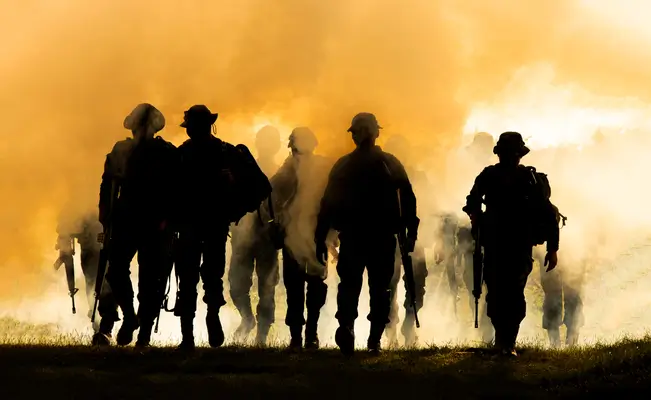
In June 2026, President Trump deployed 4,000 National Guard troops and 700 Marines to Los Angeles to protect federal property during protests sparked by immigration raids.
California claims this violated the Posse Comitatus Act, a 1878 law limiting military involvement in domestic law enforcement.
A federal judge in San Francisco, after a three-day trial ending August 13, 2026, is now deciding if the deployment crossed legal boundaries.
This article explores the legal arguments, historical context, and broader implications of this contentious issue, offering a deeper dive than existingcloser look at the case and its significance for federal-state relations.
Key Takeaways
- Judge Breyer’s decision will clarify how far federalized Guard units can go before actions become prohibited domestic law enforcement.
- California’s claims hinge on alleged detentions and roadblocks; the defense frames activities as perimeter security and force protection.
- Presence of Marines alongside Guard raises sharper Posse Comitatus scrutiny than typical state-controlled Guard deployments.
- Title 10 §12406 and possible Insurrection Act exceptions are central to the administration’s legal theory of presidential authority.
- A ruling against the deployment could constrain future protest responses; a favorable ruling could broaden White House discretion.
- The case will guide agencies on training, ROE, and documentation to avoid blurring support roles with policing functions.

The Posse Comitatus Act Explained
The Posse Comitatus Act of 1878 prohibits the military from enforcing domestic laws, preserving civilian control over policing. California argues that Trump’s use of National Guard troops to assist immigration agents in Los Angeles violated this law. The administration claims a presidential exception applies. Here’s what’s at stake.
- Core Principle: The Act ensures the military cannot act as a domestic police force, protecting democratic principles by limiting federal military power.
- Exceptions: Troops can protect federal property or personnel, but direct law enforcement actions like arrests or roadblocks are prohibited.
- Trump’s Defense: The administration cites Title 10, allowing Guard activation when the president cannot enforce laws with regular forces.
- California’s Claim: Troops detaining individuals and setting up roadblocks crossed into illegal law enforcement activities.
Details of the Los Angeles Deployment
In June 2026, 4,000 National Guard troops and 700 Marines were sent to Los Angeles amid protests over immigration raids. Initially tasked with protecting federal property, some troops later guarded agents during arrests, prompting California’s lawsuit. About 300 troops remain active through November.
- Initial Purpose: Troops were deployed to secure federal buildings, including a detention center targeted by “No Kings” protesters.
- Expanded Role: Guard members accompanied immigration agents, setting up perimeters and detaining individuals, raising legal concerns.
- Scale of Operation: At times, troops outnumbered federal agents, such as 300 soldiers to 200 agents at a Mecca operation.
Legal Arguments in the Trial
The trial, concluded on August 13, 2026, before Judge Charles Breyer, focused on whether the troops’ actions violated the Posse Comitatus Act. California and the Trump administration presented contrasting arguments, with testimony from military and federal officials shaping the debate.
- California’s Case: Deputy Attorney General Meghan Strong argued troops actively enforced laws by detaining people and blocking streets, violating the Act.
- Administration’s Defense: Eric Hamilton claimed troops only provided security, not enforcement, and cited presidential authority under Title 10.
- Judicial Focus: Judge Breyer is examining whether troops crossed the line from protection to law enforcement, a critical distinction.
- Testimony Highlights: Maj. Gen. Scott Sherman admitted concerns about potential violations but cited a constitutional exception.
Key Legal Provisions at Stake
| Legal Provision | Description | Relevance to Case |
|---|---|---|
| Posse Comitatus Act (1878) | Prohibits military from enforcing domestic laws without Congressional approval. | California claims troops’ actions constituted illegal law enforcement. |
| Title 10, Section 12406 | Allows president to federalize National Guard during invasion or rebellion. | Trump’s team argues this justifies the deployment as a lawful exception. |
| Constitutional Authority | Presidential power to protect federal personnel and property. | Administration claims this overrides Posse Comitatus restrictions. |
Historical Context of Posse Comitatus
Enacted post-Reconstruction to limit federal military overreach, the Posse Comitatus Act has been tested before, notably during the 1992 Los Angeles riots. Its relevance today lies in balancing national security with state sovereignty. I believe this case could set a precedent for future deployments.
- Origins: Passed in 1878 to end military occupation of the South, ensuring civilian control over law enforcement.
- Past Violations: Rare but significant, like the 1989 invasion of Panama, where military roles blurred with policing.
- Modern Relevance: The Act protects against militarized responses to civil unrest, a concern in polarized times.
Implications for Federal-State Relations
This case highlights tensions between federal authority and state rights. California’s challenge reflects broader concerns about federal overreach, especially in liberal states. A ruling against Trump could limit future military deployments, while a favorable ruling might expand presidential power.
- State Sovereignty: California seeks to regain control of its National Guard, citing illegal federalization.
- Federal Power: A win for Trump could strengthen presidential authority to deploy troops domestically.
- Future Precedent: The ruling may shape how the Guard is used in protests or emergencies nationwide.
Deployment Statistics (June–August 2026)
| Category | Details |
|---|---|
| Total Troops Deployed | 4,000 National Guard, 700 Marines |
| Remaining Troops | 250–300 National Guard (as of August 2026) |
| Requests for Assistance | 60+ from federal officials, most fulfilled |
Public and Expert Reactions
The deployment sparked protests and debate. Some, like Professor David Levine, argue the troops’ role blurred military and police functions. Others see it as a necessary response to unrest. Posts on X reflect divided sentiments, with some praising security measures and others decrying militarization.
- Public Outcry: “No Kings” protests criticized the deployment as an authoritarian overreach, fueling legal action.
- Expert Concerns: Legal scholars worry about eroding the military-civilian divide, citing historical abuses.
- Supporter Views: Some argue the Guard’s role was essential to protect federal agents and property.
What’s Next for the Case?
Judge Breyer’s ruling, expected soon, will determine if the deployment violated the Posse Comitatus Act. California seeks to return control of the Guard to the state and halt similarexpoiler alert: I’m concerned this could embolden federal overreach if Trump wins, but a loss might push states to challenge future deployments.
- Potential Ruling: Breyer could order the withdrawal of federalized troops or uphold Trump’s authority.
- Next Steps: The losing side may appeal, potentially escalating the case to higher courts.
- Stay Updated: Check U.S. Courts for official updates on the case.
The Bottom Line
The Los Angeles National Guard deployment case tests the boundaries of federal power and the Posse Comitatus Act.
With Judge Breyer’s ruling pending, the outcome could reshape military roles in domestic affairs.
Veterans, citizens, and policymakers should stay informed via U.S. Courts and Lawfare for expert analysis.
Frequently Asked Questions
What is the Posse Comitatus Act?
A 1878 law prohibiting the military from enforcing domestic laws, ensuring civilian control over policing. Cornell Law
Why did Trump deploy troops to Los Angeles?
In June 2026, Trump sent 4,000 National Guard troops and 700 Marines to protect federal property during protests over immigration raids.
What does California claim?
California argues the troops violated the Posse Comitatus Act by detaining people and setting up roadblocks, acting as police.
What is the administration’s defense?
Trump’s team claims the Guard provided security, not enforcement, under presidential authority to execute federal laws.
What actions sparked the lawsuit?
Troops accompanied immigration agents, detained individuals, and set up roadblocks, which California says crossed legal boundaries.
Who is Judge Charles Breyer?
A federal judge in San Francisco presiding over the case, known for handling high-profile constitutional disputes.
What could the ruling mean?
A ruling against Trump could limit federal military deployments; a win could expand presidential authority. Congress.gov
What is Title 10, Section 12406?
It allows the president to federalize the National Guard during invasions, rebellions, or when laws cannot be enforced.
Why is this case controversial?
It raises concerns about federal overreach versus state rights and the militarization of domestic law enforcement.
Where can I learn more?
Visit Justice.gov or CA.gov for legal documents and state perspectives on the case.
The VA Loan Network Editorial Team is comprised of dedicated mortgage specialists and financial writers committed to providing veterans and service members with accurate, up-to-date information on VA loan benefits, eligibility, and the home-buying process.